" LE RED STAR, mémoire d'un club légendaire"
(Extracts, Part Five)
CHAYRIGUES THE BOXER
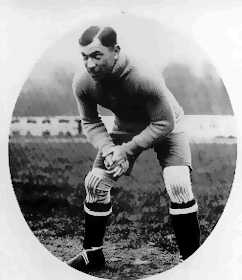
"On 27th February 1913 we faced England at Colombes. L'Auto (note - previous guise of L'Equipe) was pessimistic. A 8-0 drubbing was predicted despite the debut of Lucien Gamblin in the French side. But Chayriguès ? He was told not to perform his usual tricks in front of the British strikers, who were reputed to be tough. No sooner had the match started when Sanders found himself just two yards out and a goal seemed inevitable, but the reflexes of the Red Star goalkeeper were extraordinary, and he parried the ball away. A second warning memnts later as Hoare fired the ball towards the top left hand corner, out of the reach of Chayriguès, or so it seemed. He launched himself, and diving, maanaged to palm the ball away to safety. In doing so, Pierre Chayriguès invented the diving save. Despite losing 4-1, at least the French honour was intact.
Next day, the English press called Chayriguès a genius.
Pierrot was unmoved by all this praise. Amongst his comrades at Red Star, he was still the same straightforward uncomplicated joker, always cracking jokes.
One day, the Red Star players found themselves prisoners in a hotel in Lisbon, where they had gone to play in a tournament. They had been robbed, and didn't have a centime with which to pay their hotel bill and return to France. It as down to the ingenious Chayriguès to get them out. He agreed to a boxing match with a Portugese champion boxer with a handsomereward for the winner. The organisers expected the footballer to be massacred. He reassured them by telling them that he didn' expect his opponent to be any worse than the burly forwards he came up against on the pitch every Sunday. The match took place, Chayriguès wasn't too badly battered but richer nevertheless.
If this man from Auvergne had kept his natural cheekiness, he also kept the reputd good ense of money of his ancestors. He may have been unmoved by the praises of the English press, but the prospect of Tottenham Hotspur paying him 1000 pounds for signing on and ten pounds per game for playing ws suitable inspiration.
He was tempted, but when he was called up to do his military service at Toul in October 1913, the plans was stalled. He even missed several matches for Red Star and the French national team. So he never got to wear the blue and white of Tottenham, and the mobilisation of the French troops upon the outbreak of the Great War on the 2nd of August 1914 ended his dreams of English soccer."
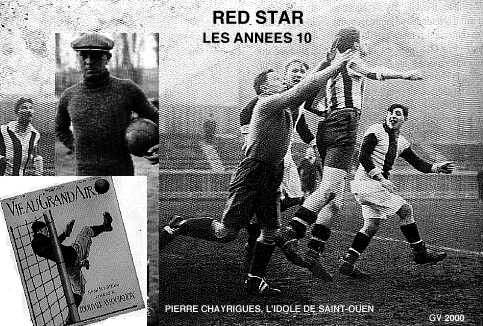
(to be continued)
LE RED STAR,
mémoire d'un club légendaire
by Guillaume Hanoteau, with Gilles Cutulic
© Robert Laffont - Editions Seghers
Dépôt légal : 1983